
Stainless Steel Wire Rope Market Trends: Why Safety-Critical Industries Are Upgrading Their Rigging Supply Chains
The global lifting and rigging market is entering a more quality-driven stage. Across construction, marine engineering, mining, industrial equipment, architecture, logistics, and energy projects, buyers are paying closer attention to safety, corrosion resistance, tensile strength, fatigue performance, and long-term reliability. In this changing environment,stainless steel wire rope is becoming a strategic product for industries that cannot afford failure in demanding operating conditions.
Wire rope has always been a critical industrial component. It is used for lifting, pulling, securing, suspension, control, load transfer, and structural support. However, the market is no longer treating wire rope as a simple consumable. Buyers increasingly understand that rope quality affects equipment safety, maintenance schedules, service life, compliance, and total operating cost. This is especially true for stainless steel wire rope, where corrosion resistance and clean surface performance create value in outdoor, marine, architectural, chemical, food-grade, and high-humidity environments.
The demand trend is being shaped by several forces: infrastructure expansion, stricter safety expectations, marine and offshore development, architectural cable systems, industrial automation, and the need for more reliable maintenance planning. As projects become larger and operating environments become more complex, stainless steel wire rope is gaining attention as a high-performance solution for applications where ordinary carbon steel rope may not provide enough environmental resistance.
Safety Is Becoming the First Procurement Standard
In lifting and rigging applications, safety is the core requirement. A wire rope may look like a small part of a crane, hoist, winch, elevator system, or suspension structure, but its performance directly affects load control and operational stability. If a rope wears, corrodes, fatigues, or breaks unexpectedly, the consequences can be serious.
This is why buyers are becoming more cautious about rope selection. They evaluate construction type, strand configuration, diameter, tensile strength, material grade, breaking load, elongation, flexibility, fatigue resistance, surface condition, and end fitting compatibility. Stainless steel wire rope is often selected when corrosion resistance must be combined with strength and appearance.
Safety-driven procurement is especially visible in construction lifting, marine rigging, offshore service, bridge systems, guardrails, architectural balustrades, and industrial machinery. In these applications, buyers often prefer materials that can maintain performance over long periods and reduce the risk of hidden corrosion. A rope that remains stable under moisture, salt exposure, and outdoor conditions can help reduce inspection uncertainty.
As global safety standards become stricter, more buyers are also asking for documentation. Material certificates, breaking strength data, production standards, inspection records, and packaging information can influence purchasing decisions. Suppliers that can provide clear technical information are more likely to win trust from project buyers.
Marine and Offshore Markets Support Long-Term Demand
Marine environments are among the strongest demand drivers for stainless steel wire rope. Saltwater, humidity, wind, UV exposure, and constant movement create harsh conditions for ordinary materials. Stainless steel wire rope is widely used in marine rigging, ship equipment, dock systems, mooring accessories, fishing equipment, yacht hardware, offshore platforms, and coastal engineering projects.
In marine applications, corrosion resistance is not just a convenience. It affects safety, maintenance cost, and service life. A rope that corrodes too quickly may lose strength, damage connected components, or require frequent replacement. Stainless steel wire rope provides a more durable option for environments where rust and surface degradation are major concerns.
Offshore energy also contributes to demand. Oil and gas platforms, offshore wind farms, marine service vessels, subsea support equipment, and port operations all require reliable lifting and securing systems. While heavy-duty offshore applications may use many rope types depending on load and environment, stainless steel wire rope remains important for auxiliary systems, safety lines, control cables, railings, and corrosion-resistant assemblies.
As offshore wind power expands, demand for marine-grade components is also increasing. Ports, installation vessels, maintenance platforms, and offshore structures need durable materials that can withstand long exposure. Stainless steel wire rope can support many of these secondary but essential applications.
Construction and Infrastructure Projects Need Durable Rigging Materials
Construction remains another important market for wire rope products. Tower cranes, hoists, elevators, suspension systems, temporary lifting structures, safety barriers, and architectural installations all use rope or cable systems. While not every construction application requires stainless steel, demand is rising in areas where appearance, corrosion resistance, and long-term durability matter.
Modern infrastructure projects often involve outdoor exposure and long service expectations. Bridges, pedestrian walkways, public buildings, transport terminals, stadiums, and urban safety systems may use stainless steel cable for support, railing, tensioning, or decorative functions. These projects require materials that maintain both structural performance and visual quality.
In high-rise construction and heavy lifting, wire rope inspection and replacement planning are major safety tasks. Buyers increasingly want materials with predictable performance and reliable production quality. Even when galvanized or carbon steel rope is used for certain heavy lifting applications, stainless steel wire rope remains important for specialized environments where corrosion resistance or clean appearance is essential.
Architectural use is also expanding. Stainless steel wire rope is used in balustrades, green walls, cable mesh, tensile structures, safety net systems, facade support, and interior design. These applications value strength, flexibility, surface brightness, and low maintenance. As architects and developers seek durable and visually clean materials, stainless steel cable solutions are gaining market attention.
Industrial Equipment and Automation Are Creating New Applications
Industrial manufacturing and automation are also supporting stainless steel wire rope demand. Equipment makers use wire rope in control systems, motion transfer, safety mechanisms, lifting devices, conveyors, packaging machinery, gym equipment, medical equipment, food processing machinery, and precision mechanical assemblies.
In these applications, rope performance depends on more than breaking strength. Flexibility, fatigue resistance, diameter consistency, surface smoothness, and compatibility with pulleys or sheaves are important. Stainless steel wire rope is valued where cleanliness, corrosion resistance, and stable mechanical movement are needed.
Food processing, pharmaceutical equipment, and clean production environments may require stainless materials because of hygiene and corrosion concerns. Outdoor automation systems, agricultural equipment, and marine machinery also benefit from stainless steel’s resistance to environmental degradation.
As automation spreads across more industries, small-diameter wire rope and cable assemblies are becoming more important. These products may be used in repeated motion systems, control lines, and load-bearing mechanisms. Buyers in these fields often require precision, consistency, and custom specifications, creating opportunities for suppliers that can support both standard and tailored products.
Maintenance Cost Pressure Is Changing Buyer Behavior
One of the strongest market trends is the shift from low-price purchasing to lifecycle cost evaluation. Wire rope replacement can be expensive when labor, downtime, inspection, access equipment, and safety procedures are considered. In difficult locations such as offshore platforms, cranes, towers, bridges, or industrial plants, replacement cost can be much higher than the rope itself.
Stainless steel wire rope helps address this issue in corrosive environments by extending service life and reducing replacement frequency. This does not mean it is the right material for every application, but in the correct environment it can provide strong lifecycle value.
Maintenance teams are also under pressure to reduce unexpected failures. Scheduled replacement is manageable; emergency replacement is costly and risky. Buyers therefore prefer materials that support predictable inspection cycles and stable performance. A wire rope that resists rust and surface deterioration can make visual inspection easier and reduce uncertainty.
This lifecycle mindset is particularly important in marine, architectural, public infrastructure, and industrial equipment applications. Buyers are willing to consider higher initial material cost if it helps reduce long-term maintenance burden and improves safety assurance.
Standards, Testing, and Traceability Are Becoming More Important
International buyers increasingly expect wire rope suppliers to provide technical transparency. Common procurement questions include rope construction, material grade, diameter tolerance, strand structure, core type, tensile strength, minimum breaking load, surface finish, lubrication, packaging, and applicable standards.
For stainless steel wire rope, buyers may ask whether the material is 304, 316, or another grade. They may also evaluate corrosion resistance requirements based on the environment. For marine and chemical environments, 316 stainless steel is often preferred because of stronger resistance to chloride exposure. For general indoor or light outdoor use, 304 may be sufficient depending on the application.
Traceability is becoming more important in safety-critical supply chains. Buyers want to know whether the product can be matched to production batches and inspection records. This helps with project documentation and long-term quality control.
Testing also plays a stronger role. Tensile testing, dimensional inspection, surface checks, and packaging verification can all influence buyer confidence. In global trade, documentation can reduce disputes and make customs, project approval, and installation planning easier.
Surface Quality and Packaging Matter in Global Trade
Wire rope is vulnerable to damage if it is poorly handled or packaged. Surface scratches, deformation, kinks, contamination, or moisture exposure can affect product appearance and performance. For stainless steel wire rope, surface finish is often part of the value proposition, especially in architectural, marine, and visible applications.
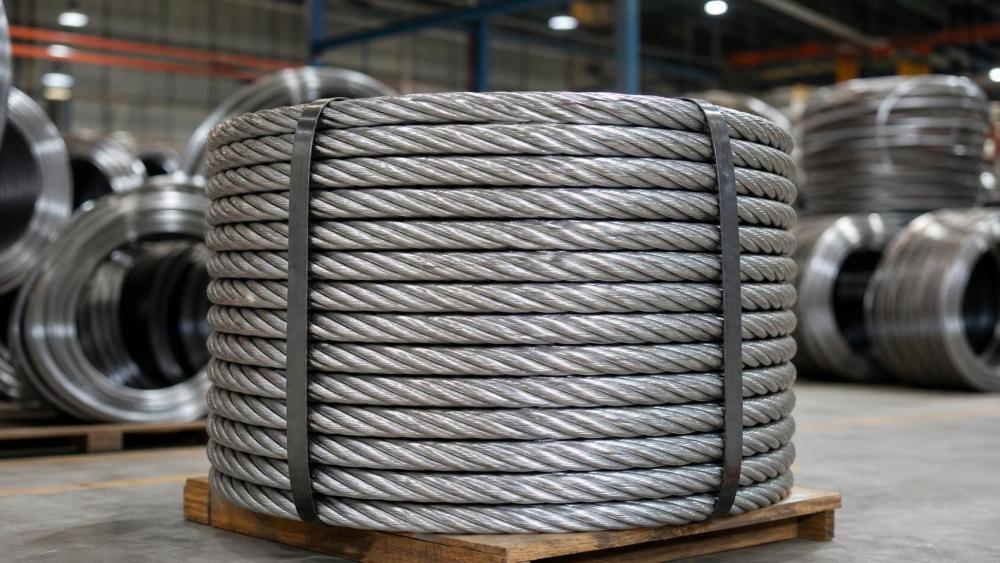
International buyers therefore pay attention to packaging. Coils, reels, spools, moisture protection, labeling, and export packing can influence delivery quality. A product that arrives clean, organized, and clearly marked is easier for buyers to store, inspect, and use.
Surface quality also affects downstream processing. Wire rope may be cut, assembled with fittings, swaged, tensioned, or installed in visible systems. Smooth surface and consistent diameter help improve assembly quality and final appearance.
As global procurement becomes more professional, suppliers that understand these practical details can stand out. The market rewards not only product strength, but also reliable handling, packing, and communication.
Architecture and Design Applications Are Expanding
A notable trend is the growing use of stainless steel wire rope in architectural and design applications. Cable railings, stair systems, bridge barriers, zoo enclosures, green facade systems, tensioned mesh, and decorative structures all use stainless steel cable because it combines strength with a clean modern appearance.
These applications are often exposed to weather and public use, so corrosion resistance and safety are essential. Stainless steel wire rope provides a balance of durability and aesthetics that suits modern construction design. It can create open visual spaces while still providing structural support or safety protection.
Architectural buyers often care about more than industrial specifications. They may evaluate surface brightness, flexibility, fitting compatibility, installation method, and long-term appearance. This creates opportunities for suppliers to provide clearer guidance on rope selection, fitting options, and application suitability.
As urban projects continue to emphasize durable public spaces and low-maintenance materials, stainless steel cable systems are likely to remain attractive.
Regional Market Opportunities Are Broadening
Demand for stainless steel wire rope is geographically diverse. In coastal regions, marine corrosion creates steady demand. In fast-growing construction markets, infrastructure and architectural projects support cable and rigging applications. In industrial economies, equipment manufacturing and automation create demand for precision rope products.
Asia remains a major production and consumption region because of its manufacturing base, construction activity, shipbuilding, ports, and machinery industries. Southeast Asia and the Middle East offer opportunities in infrastructure, marine projects, ports, energy, and public construction. Europe and North America often place greater emphasis on standards, documentation, safety, and premium architectural use.
Africa and Latin America also have long-term growth potential. Mining, ports, construction, agriculture, marine activity, and industrial development all require wire rope products. In these markets, buyers may prioritize durability, availability, and cost-performance balance.
For suppliers, regional differences matter. A marine buyer may prioritize grade and corrosion resistance. An architectural buyer may care about appearance and fittings. A lifting equipment buyer may focus on breaking strength and fatigue performance. An industrial equipment manufacturer may require precision and repeatable quality.
Outlook: Stainless Steel Wire Rope Will Remain a High-Value Industrial Product
The outlook for stainless steel wire rope is positive because it serves industries where safety, corrosion resistance, and reliability matter. As buyers become more aware of lifecycle cost and maintenance risk, demand will continue to shift toward materials that offer stronger long-term value.
The strongest opportunities will come from marine engineering, architecture, construction safety, industrial equipment, offshore energy, public infrastructure, and specialized machinery. These markets need products that can perform in demanding conditions while meeting higher expectations for documentation and quality consistency.
For buyers, the best procurement strategy is to evaluate stainless steel wire rope based on application environment, material grade, rope construction, breaking strength, flexibility, corrosion resistance, inspection support, packaging, and supplier reliability. The lowest price is not always the best value when safety and service life are involved.
For suppliers, the opportunity is to present stainless steel wire rope not merely as a cable product, but as a safety-critical component for modern infrastructure and industrial systems. Companies that can provide stable quality, clear specifications, reliable export support, and application-focused guidance will be better positioned in the global market.
As lifting, marine, construction, and industrial sectors continue to upgrade their supply chains, stainless steel wire rope will remain an essential material for projects that require strength, durability, and confidence under pressure.
Related News
- How to choose elevating work platforms for narrow indoor spacesAug 15, 2026MEWP Safety & Human Factors
- EU EN 280 Update Raises Market Entry Bar for MEWPs from August 2026Aug 15, 2026Rental Capital & IoT Strategist
- How to Choose the Right Slab Scissor Lift for Indoor Floor WorkAug 14, 2026MEWP Safety & Human Factors
- EU EN 280 Upgrade Sets New Entry Bar for MEWPs from August 2026Aug 14, 2026Dr. Elias Vance
- How EN 280 Shapes Boom Lift Controls and Operator Safety ChecksAug 13, 2026Dr. Elias Vance
- Russia’s Crane Gap Keeps LMI, Anti-Collision Radar in FocusAug 13, 2026Rental Capital & IoT Strategist