
TCO Index Signals Telematics ROI Shift
On 2026-07-05, the release of the Q2 2026 Global Rental Capital & Utilization TCO Index pointed to a rules-of-execution shift in how rental fleets assess fleet modernization, especially where telematics functions are being used to support maintenance discipline, battery-life management, and equipment uptime in AC Direct Drive Scissor Lifts. For distributors, rental operators, procurement teams, and after-sales service providers, the significance is not just the reported return improvement itself, but the way ROI evidence may increasingly shape technical specifications, purchasing review, service documentation, and delivery expectations in North America and GCC-facing business discussions.
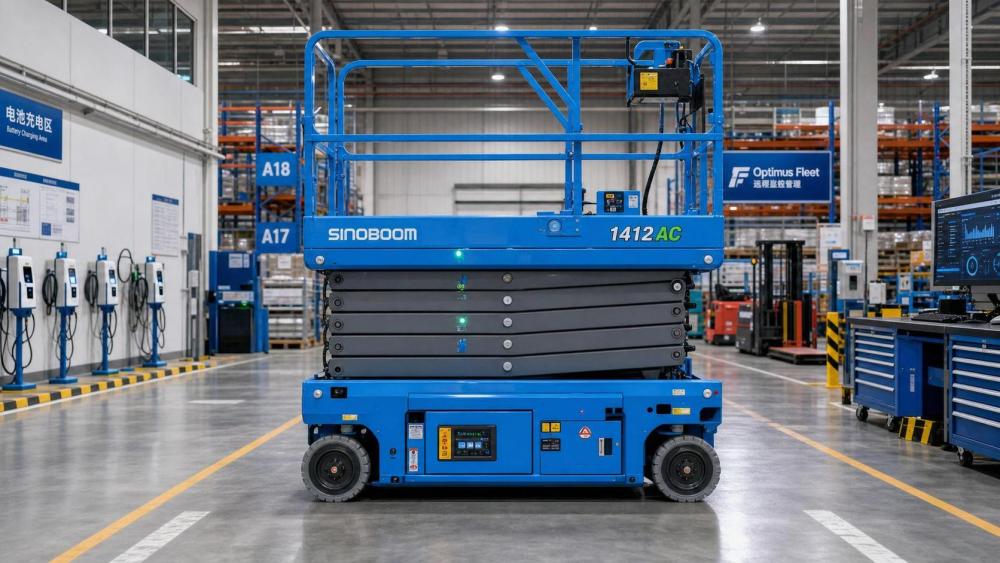
What the Q2 2026 index actually confirmed
The confirmed information is limited but commercially relevant. The latest Global Rental Capital & Utilization TCO Index for Q2 2026, released on 5 July, reported a 12.3% year-on-year increase in telematics-driven ROI across the top 20 rental fleets covered by the index.
According to the event summary, that increase was associated with predictive battery health alerts and geofenced maintenance triggers used in AC Direct Drive Scissor Lifts. The same summary states that the index connected the ROI improvement to lower unplanned downtime and longer lithium battery cycle life.
The summary also indicates that this serves as empirical support for distributors seeking ROI-based fleet modernization proposals aimed at North America and GCC markets. No additional policy text, regulator notice, certification rule, or formal enforcement document was provided in the input.
Why this matters for commercial and compliance-facing workflows
Technical distributors may face tighter proof requirements
Analysis shows that distributors are the most immediate group affected because the index is described as offering empirical validation for modernization proposals. In practice, that can raise expectations around technical bid alignment, lifecycle-cost justification, and the presentation of telematics-enabled maintenance logic in proposal materials. What deserves closer attention is whether buyers begin treating ROI-backed telematics functionality less as an optional product feature and more as a procurement threshold in fleet renewal discussions.
Rental fleet operators may need stronger maintenance traceability
From an industry perspective, the reported gains are tied to predictive alerts and geofenced maintenance triggers, which places operational traceability closer to the center of fleet management. That can affect service logs, maintenance response records, battery-life tracking, and internal control procedures. Even without a new formal rule cited in the input, operators may need to watch for customer-side requirements that increasingly ask for documented uptime management methods rather than general performance claims.
Procurement and delivery teams may see specification changes
Observably, procurement teams and delivery coordinators could be affected if fleet buyers start incorporating telematics-related functions into purchase specifications, acceptance checklists, or handover documents. The practical impact would likely fall on equipment configuration review, supporting technical files, and delivery-stage confirmation that the required monitoring or maintenance-trigger capabilities are present and usable.
After-sales and service providers may be pulled into compliance support
Where ROI claims are linked to reduced downtime and longer battery cycle life, after-sales providers may come under greater pressure to support those outcomes with service evidence. This does not confirm any new certification requirement, but it does suggest that maintenance documentation, fault-response records, and quality traceability could become more commercially important in markets where modernization proposals are being evaluated on measurable operating outcomes.
What companies should monitor next in active projects
Check whether telematics language is moving into bid and purchase documents
Analysis shows that one practical checkpoint is whether tenders, quotations, or procurement reviews begin to describe predictive battery alerts and geofenced maintenance triggers in more explicit technical terms. If that happens, companies may need to update specification sheets, compliance statements, and product comparison materials to avoid a gap between commercial claims and documented capability.
Review support files tied to lithium battery operation
What deserves closer attention is the documentary side of lithium-equipped fleet deployment. Although the input does not provide certification or testing details, companies should monitor whether customers ask for clearer technical files related to battery-health management, maintenance logic, or lifecycle-use assumptions when evaluating modernization proposals.
Track regional execution language for North America and GCC projects
The event summary explicitly mentions North America and GCC markets, so exporters, distributors, and channel partners should watch for differences in how project documents, customer requirements, or service expectations are expressed across those target markets. This should be understood as a monitoring point rather than a confirmed rule change, because no formal regulatory text for either market was provided in the input.
Prepare for closer scrutiny of service and uptime claims
Where commercial positioning relies on reduced downtime and longer battery cycle life, companies should be cautious about how those claims are documented in proposals and after-sales commitments. Observably, the nearer-term issue is not a confirmed enforcement action, but the possibility that customers and partners will ask for more consistent evidence, records, and technical explanations before accepting ROI-based modernization proposals.
How this signal should be read at this stage
From an industry perspective, this development is more appropriately understood as an execution signal than as a standalone new regulation. The index does not itself create a law, standard, or certification framework in the material provided here. However, it does show that measurable telematics outcomes are becoming more central to how fleet-upgrade decisions may be justified in the market.
Analysis shows that the main implication lies in commercial rule-setting by the market: specification language, maintenance expectations, service traceability, and ROI documentation may start carrying more weight in procurement and channel discussions. Whether that develops into firmer compliance thresholds still requires observation of customer documents, certification interpretations, and market feedback.
A measured reading of the current development
The immediate importance of this event is not that a formal policy framework was announced, but that a recognized index release appears to give stronger evidence for telematics-led fleet modernization arguments in lithium AC scissor lift deployment. For companies operating across distribution, procurement, service, and export-facing workflows, the relevant question is how quickly this evidence begins to influence technical requirements and delivery expectations.
It is more appropriate to understand this update as an actionable market signal with potential compliance and procurement implications, rather than as a completed regulatory change. Continued attention should remain on how buyers, channel partners, and project documents translate this kind of ROI evidence into actual operating requirements.
Basis of this article and points that still require verification
This article is based on the user-provided news title, event date, and event summary. No specific official source link was provided in the input, so the underlying official publication path still needs to be verified on an ongoing basis.
For this type of development, source categories that are usually relevant include official announcements, regulatory releases, trade or customs authority updates, industry association publications, standard-setting documents, and reporting by authoritative industry media. In this case, further observation is still needed on any detailed policy language, certification interpretations, tender-document changes, execution standards, industry feedback, and actual company-level implementation practices that may follow from the market signal described above.
Related News
- How to size a slewing mechanisms drive unit for crane duty cyclesAug 21, 2026Structural Rigging Architect
- When do topless tower cranes for infrastructure make sense on tight sitesAug 20, 2026Structural Rigging Architect
- How telehandler safety rules affect access equipment choice on siteAug 19, 2026Dr. Elias Vance
- How hydraulic control systems affect load stability in boom liftsAug 18, 2026MEWP Safety & Human Factors
- How to choose hydraulic valves for construction hoists that hold loads safelyAug 17, 2026Fluidic Lifting Physicist
- When do backup emergency lowering systems actually matter on lifts?Aug 16, 2026Dr. Elias Vance