
Equipment Lifecycle Management: When to Repair, Rebuild, or Replace Heavy Equipment
Why does equipment lifecycle management matter more than routine maintenance?
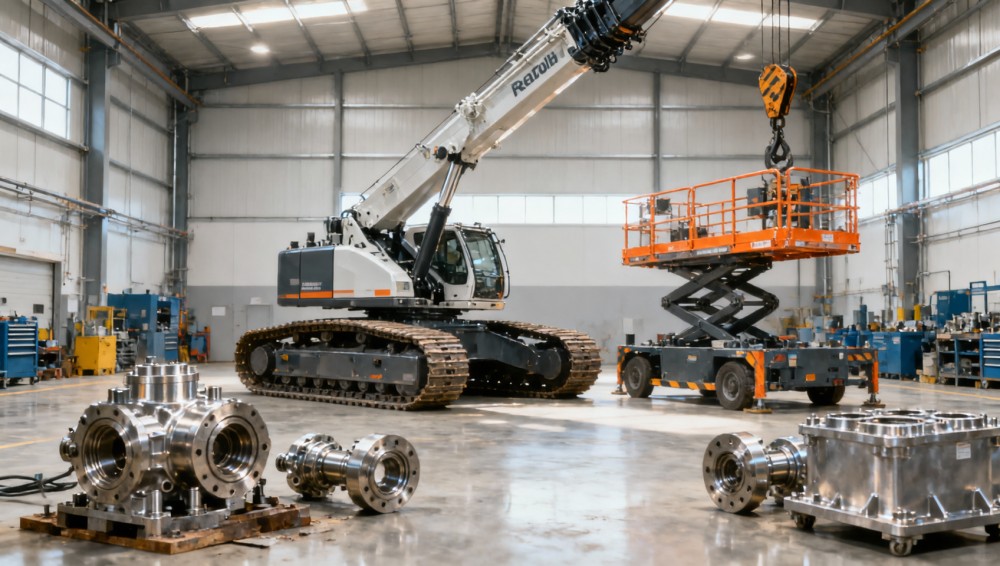
Equipment lifecycle management decides how long a machine remains safe, productive, and financially sensible. In heavy fleets, that choice rarely depends on age alone.
A crawler crane, boom lift, or hydraulic lifting system can still look serviceable while hidden fatigue, control drift, or valve wear quietly raises risk.
That is why equipment lifecycle management sits between engineering reality and capital discipline. It shapes uptime, residual value, insurance exposure, and jobsite safety.
In sectors tracked closely by HLES, the stakes are even higher. Tower cranes, MEWPs, anti-collision systems, and load-holding hydraulics operate where failure becomes operational, contractual, and human loss at once.
A useful question is not, “Can this machine still run?” A better one is, “Can it still deliver reliable output without distorting total ownership cost?”
That shift in thinking helps separate three different decisions: repair for continuity, rebuild for life extension, or replace for performance and risk control.
When is a repair still the smart move?
Repair makes sense when the fault is isolated, the structure remains sound, and the machine can return to predictable service without repeated disruption.
This is common with wear items, electrical faults, hose assemblies, sensors, tires, batteries, or non-structural hydraulic components.
For example, replacing a faulty tilt sensor on a MEWP is very different from correcting chronic platform instability linked to deeper control or chassis issues.
The same applies to cranes. A damaged cable reel or worn sheave may justify repair. Repeated boom deflection alarms under normal load require broader investigation.
In practical equipment lifecycle management, repair usually works best when five conditions align:
- Downtime is short and parts are readily available.
- The failure has a clear root cause.
- Safety systems remain compliant after repair.
- The machine still meets utilization targets.
- Repair cost stays well below rebuild cost.
A common mistake is approving repeated small repairs because each one looks affordable in isolation. Over a year, those “cheap” interventions often become the most expensive option.
How do you know it is time to rebuild rather than keep fixing?
Rebuild becomes attractive when the asset still has strategic value, but major systems have aged past efficient repair cycles.
This often applies to high-value cranes, lifting frames, engine systems, slew assemblies, hydraulic circuits, and powertrains with solid structural foundations.
In equipment lifecycle management, rebuild is not a cosmetic refresh. It is a controlled reset of performance, reliability, and inspection confidence.
For heavy lifting environments, rebuild deserves attention when telemetry, maintenance logs, and field reports reveal repeating failures across connected systems.
That pattern matters in fleets using anti-collision IoT, CAN-bus telematics, and advanced hydraulic controls. One weak subsystem can trigger broader utilization losses.
More often than not, rebuild is justified by economics plus availability. Replacing a specialized crane may involve long lead times, certification delays, or site-specific integration challenges.
A rebuild decision should always follow structural inspection, control-system review, and realistic post-rebuild utilization assumptions. Without those checks, lifecycle planning turns into wishful budgeting.
At what point does replacement become the lower-risk option?
Replacement usually becomes the better choice when old equipment cannot match current safety expectations, productivity demands, or maintenance efficiency.
This is especially visible in MEWPs and connected lifting fleets. Newer units often bring better fault diagnostics, stronger battery performance, lower leak exposure, and cleaner compliance pathways.
In equipment lifecycle management, replacement is not only about breakdown frequency. It is often about what the older machine prevents you from doing.
An outdated boom lift may still operate, yet fail to support modern fleet telematics, geofencing, digital inspection records, or emerging site access rules.
For cranes, replacement may be necessary when structural fatigue, obsolescent control electronics, or unsupported LMI architecture make reliability too dependent on custom fixes.
The less visible driver is opportunity cost. If a machine spends too much time waiting for parts or specialist service, its low book value stops being an advantage.
- Replace when safety-critical systems approach unsupported status.
- Replace when utilization falls despite ongoing maintenance spend.
- Replace when fuel, leakage, or energy costs distort operating margins.
- Replace when the machine no longer fits target contracts.
Which cost signals matter most in equipment lifecycle management?
The most useful cost view combines direct maintenance, unplanned downtime, compliance spending, resale outlook, and the revenue impact of lower availability.
That sounds obvious, but many lifecycle reviews still focus too heavily on workshop invoices and not enough on operational drag.
A heavy asset can remain cheap to own on paper while becoming expensive to schedule, insure, staff, and recover after delays.
HLES coverage of lifting capital trends points to a broader shift. Telematics, safety analytics, and utilization reporting now make cost comparison more precise than before.
In real fleet assessments, the following indicators usually reveal whether equipment lifecycle management is healthy or drifting:
- Maintenance cost per operating hour over the last 12 to 24 months.
- Downtime days per quarter and their contract impact.
- Repeat failures involving hydraulics, controls, or safety interlocks.
- Parts availability and dependence on legacy suppliers.
- Residual value after major repair or rebuild investment.
- Energy, fuel, and fluid-loss performance versus newer models.
Simple payback models can mislead when they ignore risk. A cheaper machine is not cheaper if one hydraulic incident shuts down a critical wind or infrastructure project.
What mistakes weaken repair, rebuild, or replacement decisions?
One frequent error is treating all equipment categories the same. A tower crane, scissor lift, and counterbalance valve assembly age differently and fail differently.
Another problem is separating finance review from engineering review. Equipment lifecycle management works best when inspection data and ownership cost data tell one story.
There is also a tendency to overvalue sunk costs. A recent engine overhaul does not automatically justify keeping a machine with structural or control-system uncertainty.
In high-altitude and heavy-lift applications, hidden risk often lives in the interfaces. Sensors, hydraulics, software overrides, load charts, and structural tolerances must still perform together.
That is why inspection depth matters. FEA-informed structural review, ANSI or EN compliance checks, and telematics-based fault patterns can reveal issues that service logs alone miss.
If the decision remains borderline, a short decision screen helps:
- Is the machine safe to return to full-duty service?
- Will the chosen action reduce repeat failures, not just delay them?
- Does the asset still match future utilization plans?
- Will compliance and parts support remain viable for several years?
How should the next decision be made on a real fleet?
Start with asset segmentation. Separate structurally critical lifting equipment from support machines, then rank them by downtime impact and safety sensitivity.
Next, compare each unit across three views: technical condition, economic burden, and operational fit. That produces a far stronger equipment lifecycle management map.
It also helps to define trigger points in advance. For example, a unit may move from repair to rebuild after repeated hydraulic failures or from rebuild to replacement after compliance costs rise past a set threshold.
In demanding crane and MEWP environments, the best decisions are usually data-backed and site-aware. They account for operator safety, utilization pressure, certification needs, and long-term asset value together.
In short, equipment lifecycle management is strongest when it stops being reactive. Build a review standard, track cost per hour, test safety assumptions, and challenge whether the machine still earns its place in the fleet.
That approach creates a clearer next step: repair what is truly contained, rebuild what still has durable value, and replace what no longer supports safe, efficient growth.
Related News
- Industrial Plant Lifting Hoists: Common Failure Risks and FixesJun 23, 2026Structural Rigging Architect
- When a Hybrid Boom Lifts Supplier Is Worth the Extra CostJun 23, 2026MEWP Safety & Human Factors
- How Equipment Utilization Tracking Cuts Fleet Ownership CostsJun 23, 2026Rental Capital & IoT Strategist
- Rough Terrain Cranes vs All-Terrain Cranes: Key Jobsite Trade-OffsJun 23, 2026Heavy Kinematics Scientist
- How to Choose Wind Power Cranes for Blade InstallationJun 23, 2026Heavy Kinematics Scientist
- Hormuz Shipping Strain Lifts Crane Lubricant CostsJun 23, 2026Structural Rigging Architect